
Selecting the Ideal Conveying System for Your Packaging Line
Rudy Sanchez of Key Technology explains the respective advantages of belt conveyors, vibratory conveyors, and horizontal-motion conveyors.
By Rudy Sanchez, Food Handling Systems Product Development Manager at Key Technology
Conveyors often operate in the background compared to other packaging-line equipment. Yet, as manufacturers and packers are pushed to do more with less, conveying decisions increasingly shape how well the rest of the line performs. The right system supports consistent throughput, protects product integrity and accommodates evolving production requirements. The wrong choice can introduce bottlenecks, increase maintenance demands or undermine overall line performance.
Choosing the right conveying approach requires more than comparing equipment costs or standard layouts. Different technologies interact with product in fundamentally different ways, and those interactions influence outcomes over time.
Defining Application Requirements
The starting point for designing a conveying system is understanding how product behaves on the line. Fragility, surface texture, temperature and the presence of coatings or seasonings all influence how material should be conveyed. Sanitation requirements — particularly when handling open product — place additional demands on design and cleanability. Capacity targets, elevation changes and available floor space further guide the system layout and configuration.
ADVERTISEMENT

Packaging operations must also contend with broader operating pressures. Labor availability remains tight in many regions, increasing the value of systems that support consistent automation with minimal intervention. Frequent changeovers and shorter production runs place additional emphasis on equipment that is easy to clean, simple to adjust and able to deliver consistent performance. In this context, total cost of ownership often provides a more useful measure than initial purchase price alone.
Most packaging lines rely on one or more of three primary conveying technologies: belt conveyors, vibratory conveyors, and horizontal-motion conveyors. Each offers distinct advantages, depending on how well its operating principles align with the demands of the application.
Belt Conveyors
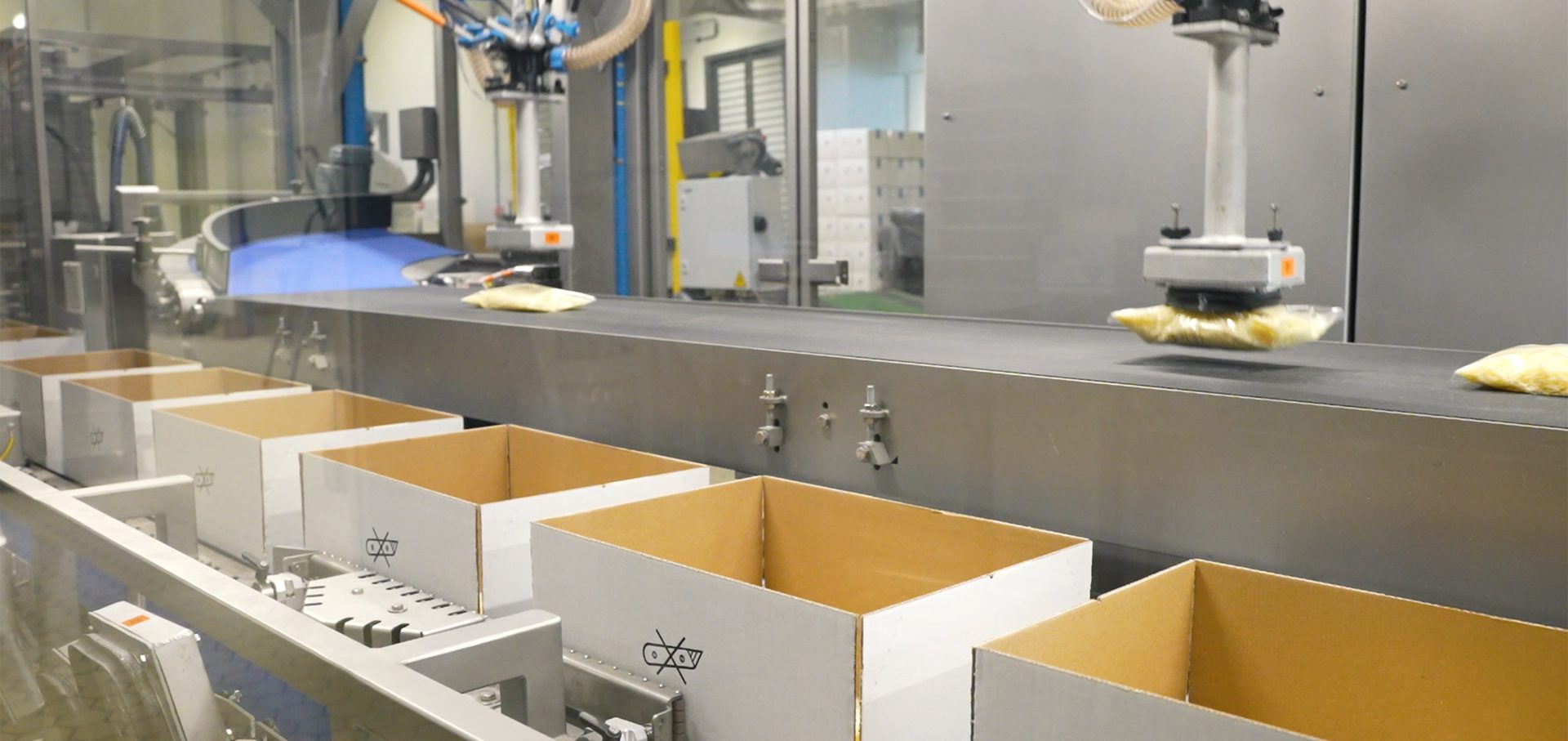
Belt conveyors are a common fixture on packaging lines, largely due to their straightforward architecture and relatively low initial cost. They are regularly selected for moving packaged products, where package stability and control are the primary considerations. Belt conveyors are also often the preferred choice when products must move up or down between processes, since the belt provides continuous support through elevation changes. In some applications, belt systems can provide accumulation or buffering to help manage downstream variability.
Available in a range of belt materials and configurations, belt conveyors can be adapted to many products and packaging formats. However, they introduce trade-offs that must be considered during system design. Multiple moving components — including belts, pulleys and scrapers — increase maintenance requirements over time. Additionally, cleaning can be more involved, particularly in applications handling open product. These factors can raise total cost of ownership compared to other conveying technologies, even when initial capital cost is lower.
Vibratory Conveyors
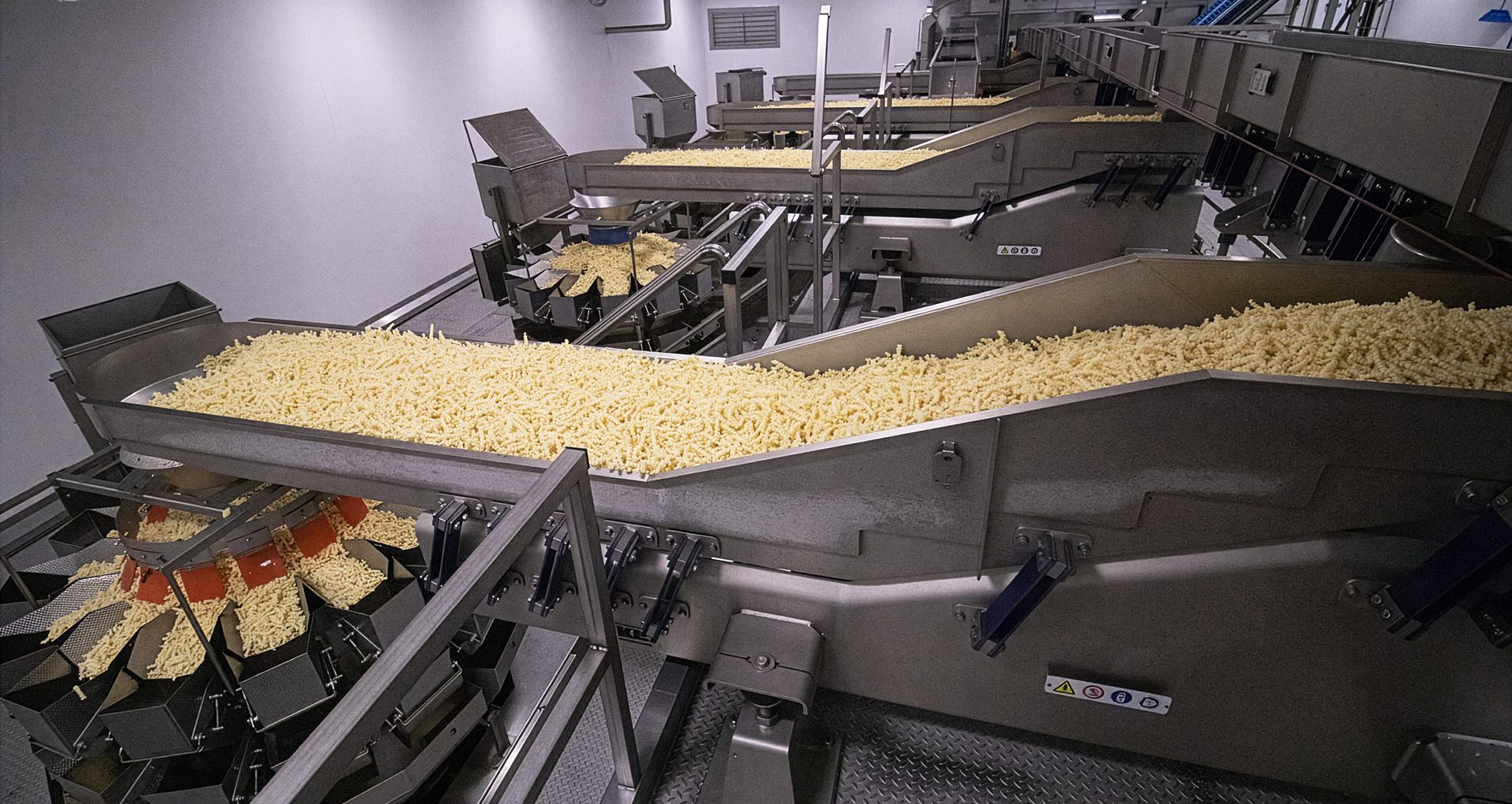
Vibratory conveyors, often referred to as shakers, move product using controlled vibration rather than a continuous belt. Frame-mounted drives and spring assemblies transmit energy to the bed, creating a diagonal, harmonic motion that lifts and advances product along the surface. That motion can be tuned to suit different products and packaging requirements, allowing product to move forward in a controlled manner while spreading it across the width of the conveyor.
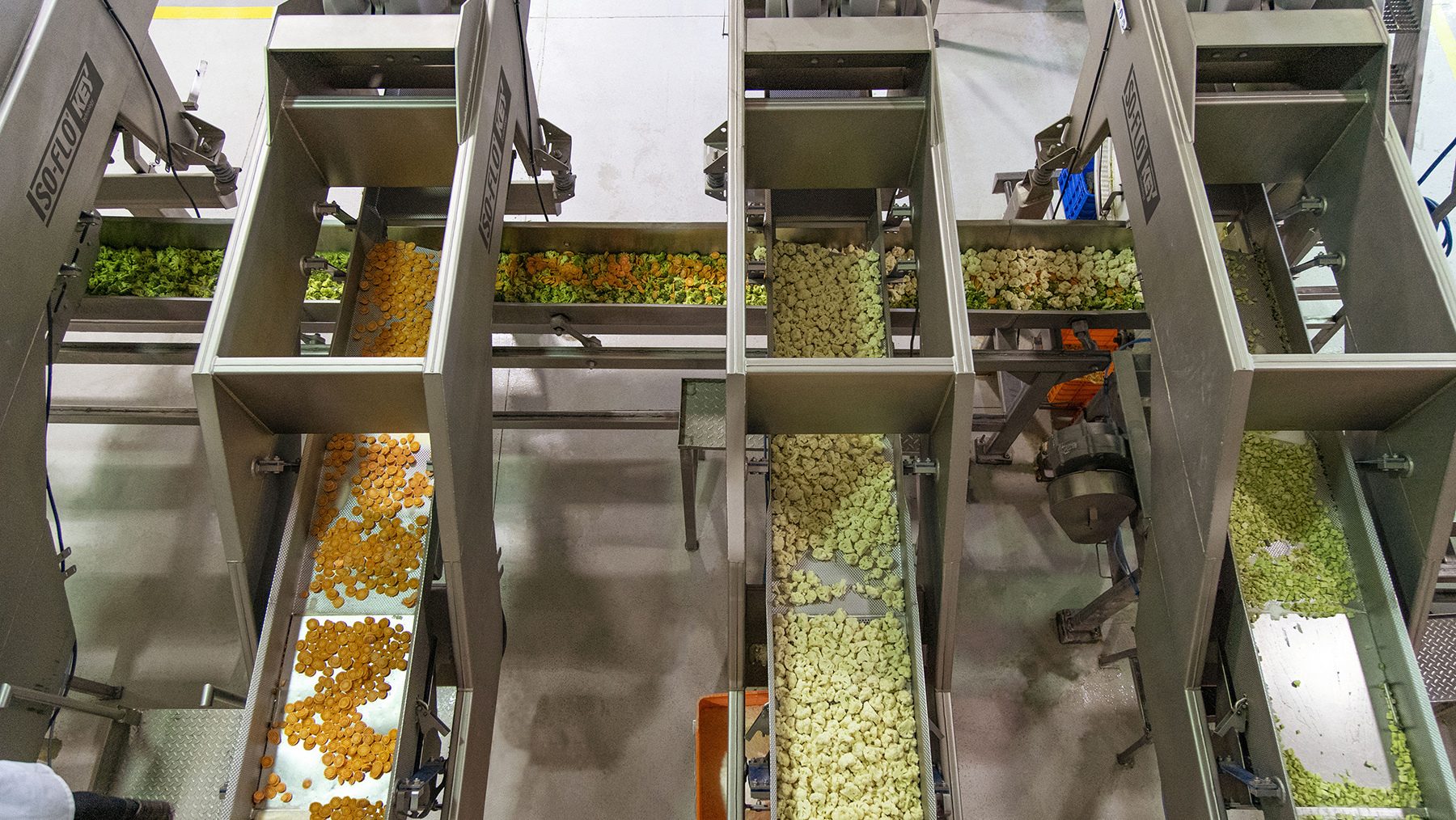
Iso-Flo vibratory conveyors meter separate vegetables onto a collection conveyor to create a consistent mix for packaging.
Compared to belt conveyors, vibratory conveyors are inherently more sanitary, with stainless-steel product zones and no belts, pulleys or geared components in the product contact area. Fewer wear components reduce maintenance requirements over time, contributing to a lower total cost of ownership. Some newer vibratory designs further reduce maintenance by eliminating the need for routine lubrication or oil changes.
Vibratory conveying supports a wide range of functions on packaging lines. The vibratory motion naturally separates and spreads product, making it ideal for applications where consistent product presentation matters such as feeding scales or sorting systems. Screens can also be incorporated to remove fines, separate product by size or drain excess water or oil, while gates and diverters can be integrated to distribute product to multiple packaging lanes.
Horizontal-Motion Conveyors
Horizontal-motion conveyors are ideal for applications where product integrity is especially important. Unlike vibratory systems that lift product to create forward movement, horizontal-motion conveyors advance product using a controlled horizontal stroke followed by a slower return. By minimizing agitation, this sliding action helps protect product quality by reducing breakage and limiting the loss of seasonings or coatings.
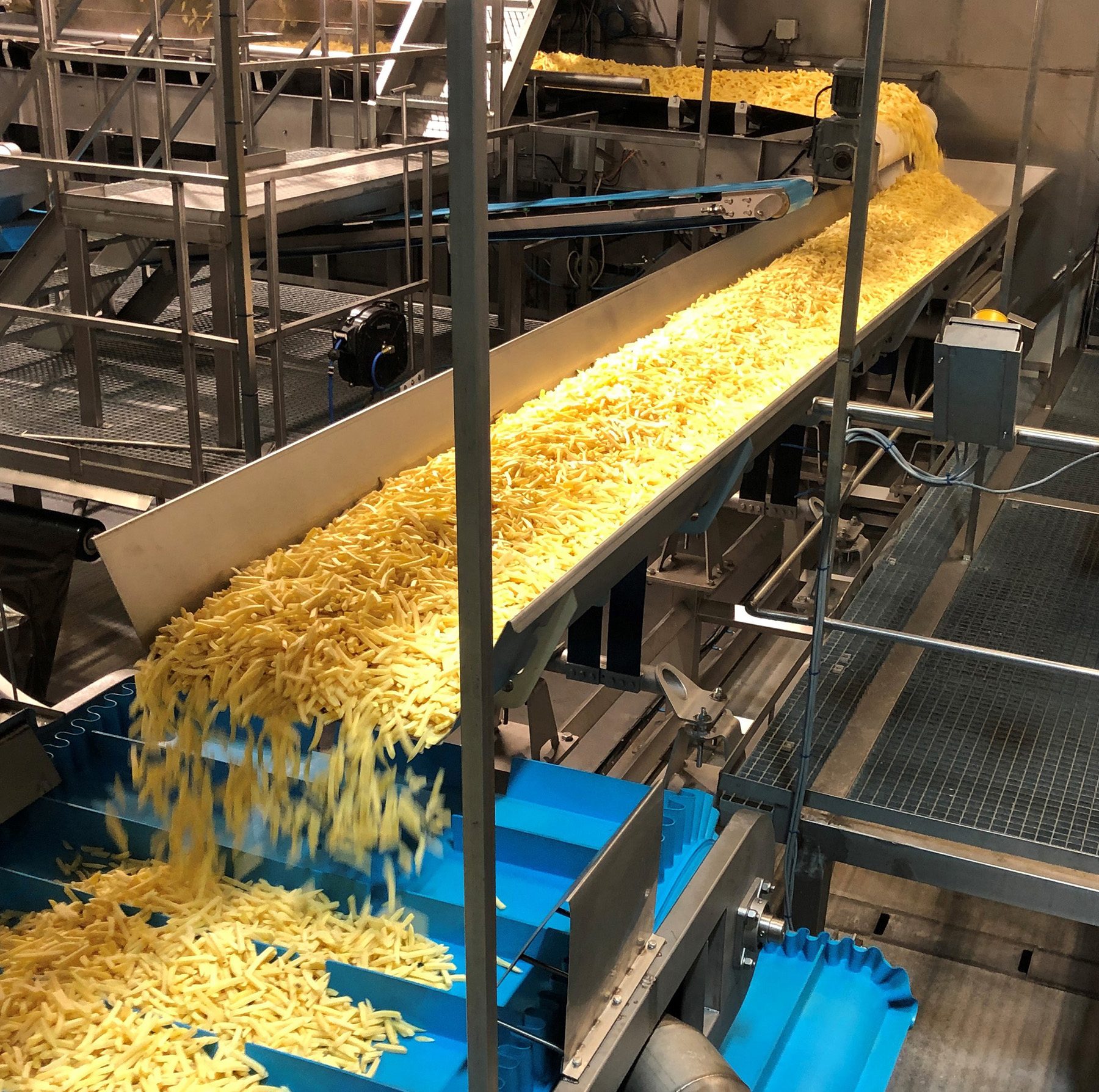
A Zephyr horizontal-motion conveyor gently moves product to reduce breakage.
As a result, horizontal-motion conveyors are a popular choice for seasoned snacks, coated products and other delicate items. In blended products, the sliding action helps prevent size separation, maintaining mix consistency through packaging. For some products, particularly dense or frozen items, horizontal-motion conveyors can operate more quietly than vibratory systems by reducing product impact on the bed surface.
Some horizontal-motion systems are designed to allow product to flow in reverse, offering additional flexibility or short-term accumulation without adding separate equipment. For heavier loads, horizontal-motion conveyors can also provide limited bulk storage while maintaining gentle handling. From an operational standpoint, these conveyors are typically easy to clean and maintain, which simplifies sanitation and routine upkeep.
Making an Informed Decision
There is no single conveying solution that fits every packaging line. Selecting the right system depends on understanding how product characteristics, line objectives and operating constraints intersect in a real-world environment. Each technology offers distinct advantages, and those benefits only become meaningful when they align with the specific demands of the application.
By focusing on how different conveyors interact with product during operating conditions, manufacturers and packers can make informed decisions that support reliable performance today while maintaining the flexibility to adapt in the future as requirements evolve.