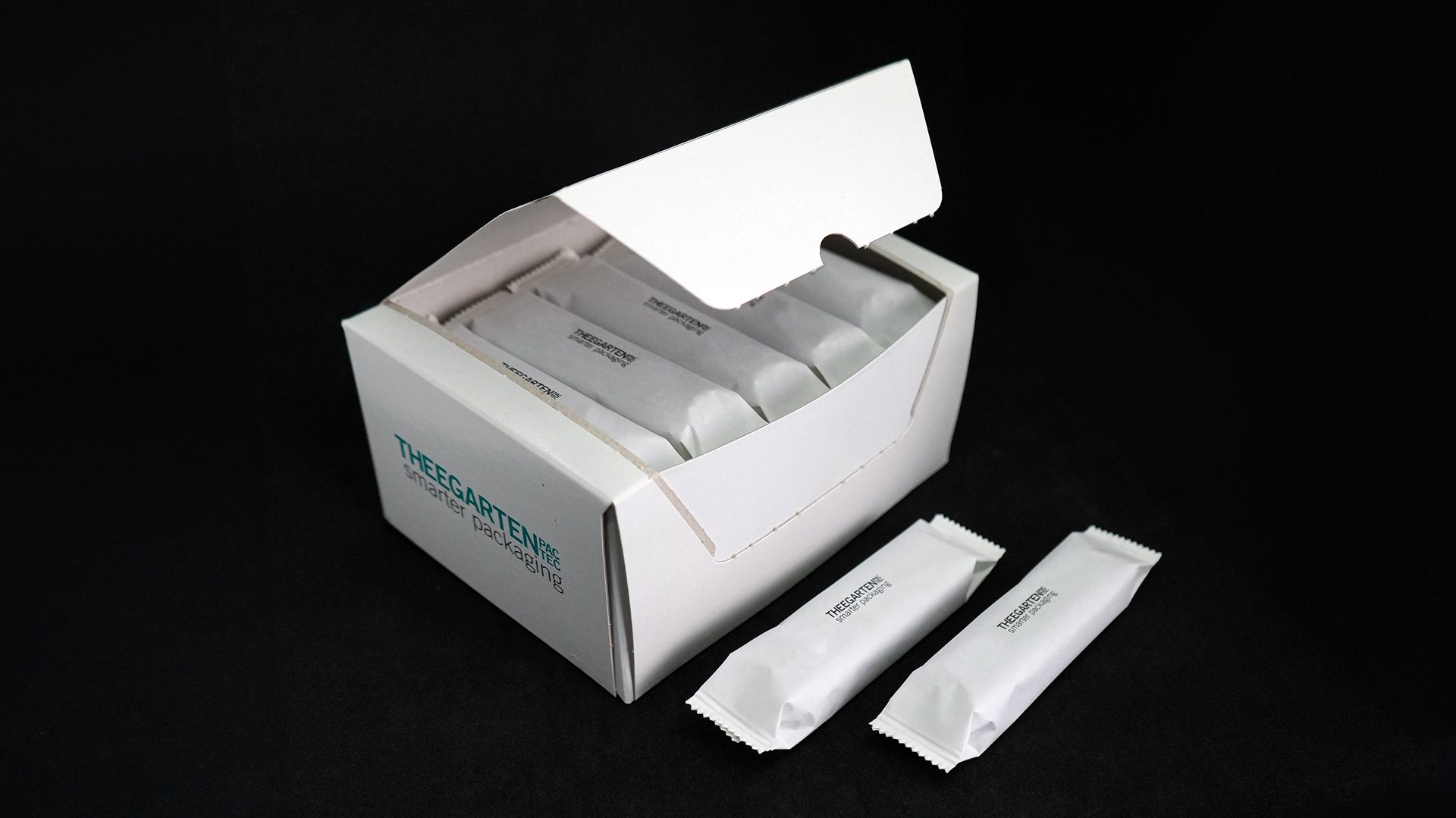

New Equipment Targets Chocolate, Confectionery
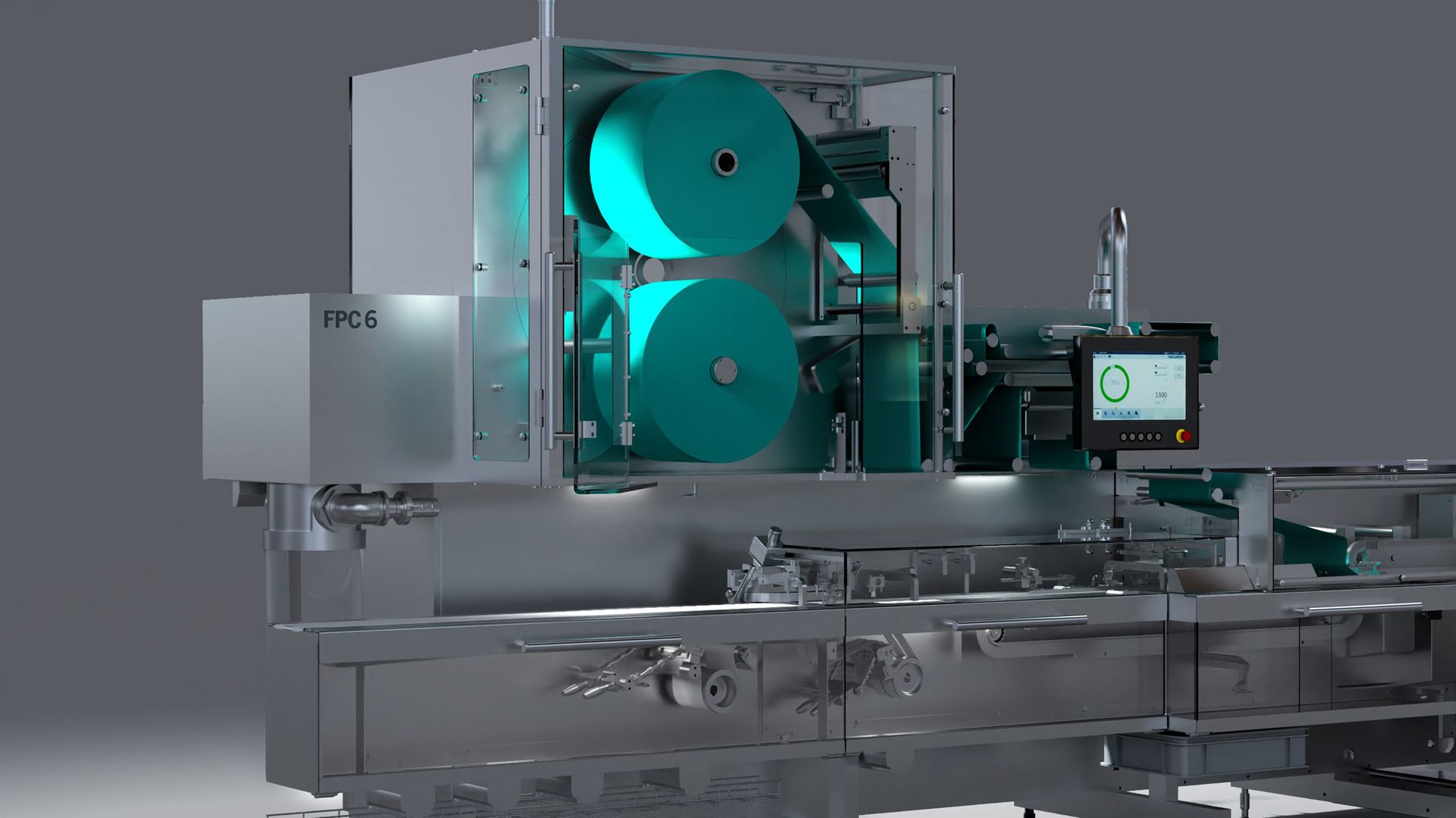
New flow-wrapping machine is designed to meet the requirements of manufacturers of chocolate, confectionery, cereal and protein bars, functional foods, and snacks.
By Packaging Strategies Editorial Staff
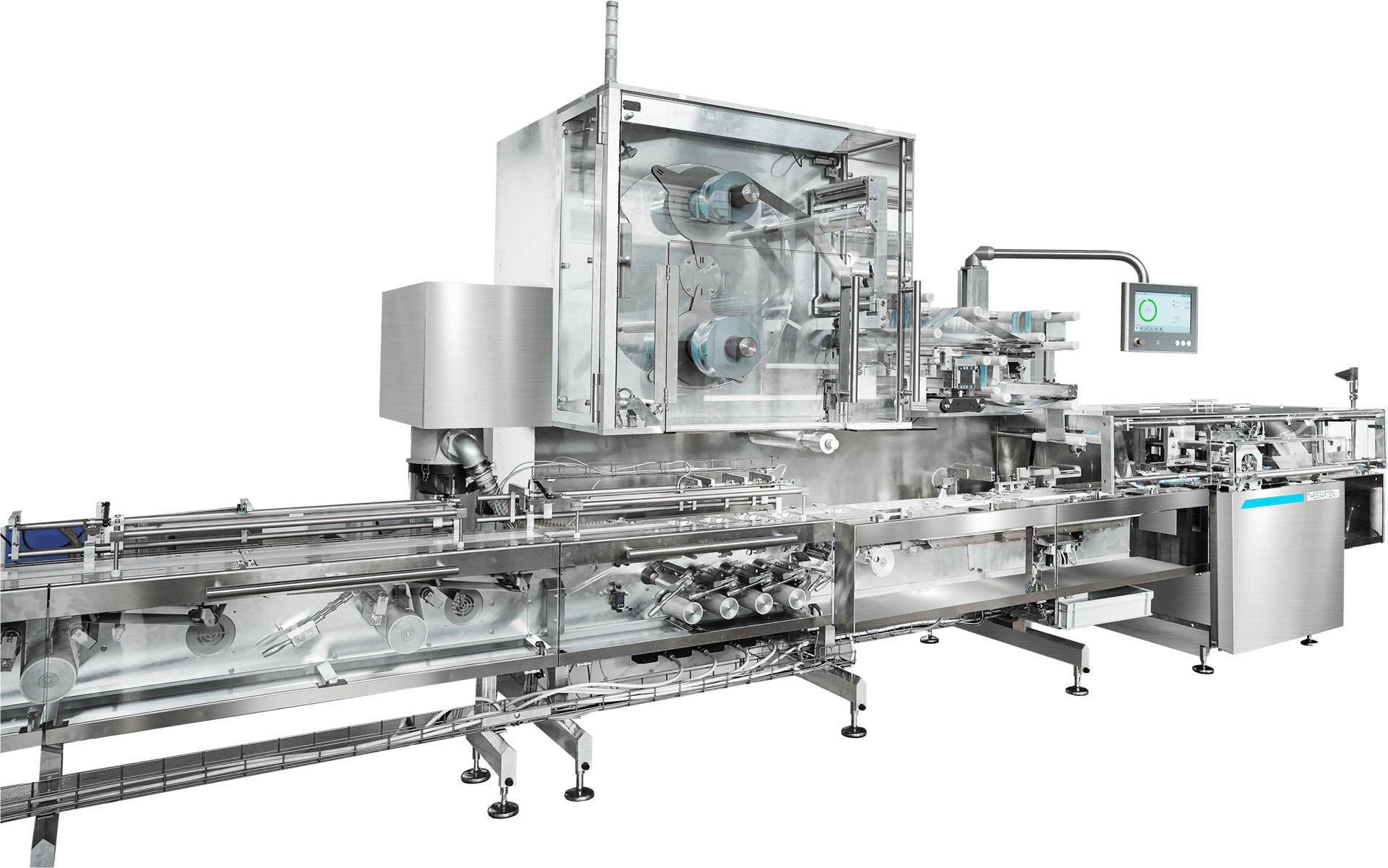
With its new FPC6, Theegarten-Pactec is launching an innovative flow-wrapping machine specifically designed to meet the requirements of manufacturers of chocolate, confectionery, cereal and protein bars, functional foods and snacks, as well as co-packers and contract packers.
“The new development combines outstanding flexibility with advanced user-friendliness, digital networking and maximum process reliability,” the company says. “With the FPC6, Theegarten-Pactec is specifically strengthening its expertise in flow-wrap packaging and presenting this innovative system solution for efficient packaging processes — from unpackaged products to secondary packaging in cartons — at this year’s interpack.”
From the FPC6, the flow packs are fed into the directly connected high-performance BLM cartoner, also developed by Theegarten-Pactec.
Outstanding flexibility for a wide range of products and packaging materials
The FPC6 reliably packs chocolate, confectionery, cereal and protein bars, functional foods and snacks into flow packs. It processes a wide variety of product formats without major retooling and masters several sealing types — cold sealing, heat sealing and cut-seam welding for water-soluble films. An integrated preheating section also enables the reliable processing of sensitive materials such as paper or recyclable mono films, even in high-performance operation.
“The FPC6 thereby offers maximum flexibility combined with consistently high packaging quality — a decisive advantage for manufacturers who are increasingly working with changing packaging materials and sustainable material solutions,” the company says.
ADVERTISEMENT

A new approach to operation: efficiency regardless of experience level
The FPC6 was consistently designed to make machine operation largely independent of the operators’ qualifications and experience level. Theegarten-Pactec’s goal is to enable customers to operate their systems independently, reliably and with a high degree of efficiency in times of skilled labor shortages.
A key factor is the improved identification of error causes and their effects. Enhanced visualizations on the touch panel and graphic replacement images provide operators with targeted support in systematic troubleshooting, even if the cause and the fault are physically separated. For example, the machine recognizes when faults at the machine outlet are caused by upstream process steps such as the synchronization of unpackaged products. In such cases, the control panel specifically indicates possible sources. This reduces downtime and avoids unnecessary interventions.
Theegarten-Pactec also focuses on maximum user convenience and reproducibility when changing formats: all relevant settings are recorded electronically and stored in the recipe management system. Electronic counting scales ensure repeat accuracy during format changes; manual adjustments via trial and error are no longer necessary.
‘Flying splice’ and web edge control ensure process reliability at 150 m/min
The consistency with which this simplified operating concept has been implemented is especially evident when changing packaging materials. Optimized packaging material handling is a key factor in ensuring high system availability. Typically, the packaging material has to be changed every 20 to 30 minutes during the packaging process, which is why the packaging material unwinding of the FPC6 has been optimized.
‘Flying Splice’ is just one example of the FPC6’s user-friendliness. A roll prepared with adhesive tape is simply placed on the machine; no further steps or special precautions are necessary. Correct positioning, alignment and feeding are all carried out automatically.
The so-called ‘flying splice’ technology eliminates the critical steps that were previously required, such as precise threading and sticking on a double-sided adhesive strip. A roll prepared with adhesive tape is simply placed on the machine; no further steps or special precautions are necessary. Correct positioning, alignment and feeding are then carried out automatically. Furthermore, roll changes can be carried out without reducing speed, even at packaging speeds of 150 m/min. ‘Flying Splice’ increases both process reliability and system availability with minimal training requirements.
The FPC6’s web edge control also allows the course of the film web to be adjusted directly on the HMI (human-machine interface) — for example, depending on the batch or when changing flavors. Old and new values are automatically stored in the recipe management system. Manual settings that were previously necessary are no longer required, and the original target value is retained.
Reduced footprint by delivering more performance in less space
Theegarten-Pactec also follows a clear efficiency approach when it comes to installation space. The FPC6 combines high output with a compact design. Despite its performance range, it requires a significantly shorter product feed and takes up less installation space overall than previous machine generations.
The compact design is the result of Theegarten-Pactec’s many years of engineering expertise. At an early stage, the machine configuration is precisely tailored to the products to be processed later. This is based on comprehensive tests with original products, which provide a reliable picture of the subsequent process behavior. This ensures maximum process reliability right from the start. Product speeds of up to 100 m/min can be reliably achieved on this basis.
Additionally, the integrated control cabinet further reduces space requirements. All electrical and electronic components are integrated at the rear of the machine, eliminating the need for a separate footprint.
At an early stage, the machine configuration is precisely tailored to the products to be processed later. This is based on comprehensive tests with original products, which provide a reliable picture of the subsequent process behavior.
Consistently precise print image positioning thanks to HMI-controlled film tension
The FPC6’s packaging material unwinding system is also designed for maximum process stability and ease of use. The tension of the film tube at the forming shaft (i.e., where the film is formed around the product) can be conveniently adjusted via the HMI. Excessive tension can cause the film to stretch and then contract again during the subsequent packaging process. Similar to a stretched rubber band, this shifts the print image position: the film is no longer cut exactly at the intended location, and the print image appears off-center.
To prevent this, the FPC6 features automatic print image control in the longitudinal seal. In this area, the packaging material is already ‘relaxed’ so that a sensor can reliably detect whether the print image position is still correct. In the event of deviations, the operator can fine-tune the film tension directly on the HMI — quickly, reproducibly, and without mechanical intervention. “This is especially relevant when new batches of the same packaging material behave differently or when environmental influences such as temperature and humidity change,” the company says.
About Theegarten-Pactec
Theegarten-Pactec specializes in the design and construction of packaging machines for small-pieced confectionery items. The company combines more than 20 different types of packaging with a broad performance spectrum. Apart from individual machines, the company also offers complete packaging lines as a turnkey partner. The following products can be packed or wrapped: hard candies, toffees, chewy sweets, chewing gums, chocolate products, and various other food and non-food products. Theegarten-Pactec has its headquarters in Dresden, Germany.