Improvements in Palletizing Take Center Stage

Courtesy of Nefab
As palletizing remains one of the most important links in the supply chain, several innovations have emerged in a variety of areas.
By Bobby Douglas
Across all industries, businesses must continuously prioritize safety and efficiency when it comes to storing, handling and transporting their products to their respective destinations. Palletizing plays a critical role in ensuring these goals are met. A major cog in the supply chain, having reliable palletizing processes can relieve a lot of hiccups in a product’s journey to store shelves. As a result, several improvements in palletizing, in areas like sustainability and robotics, have emerged over the last year.
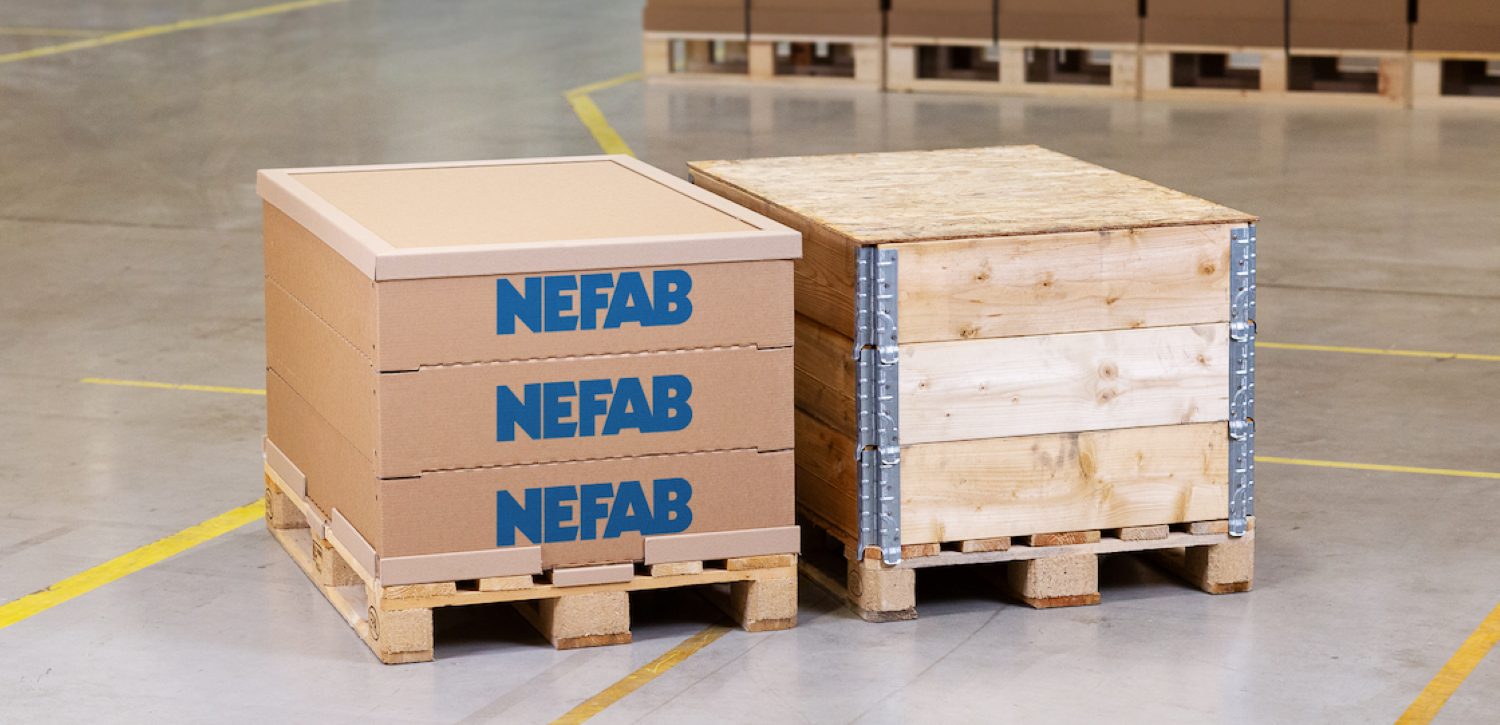
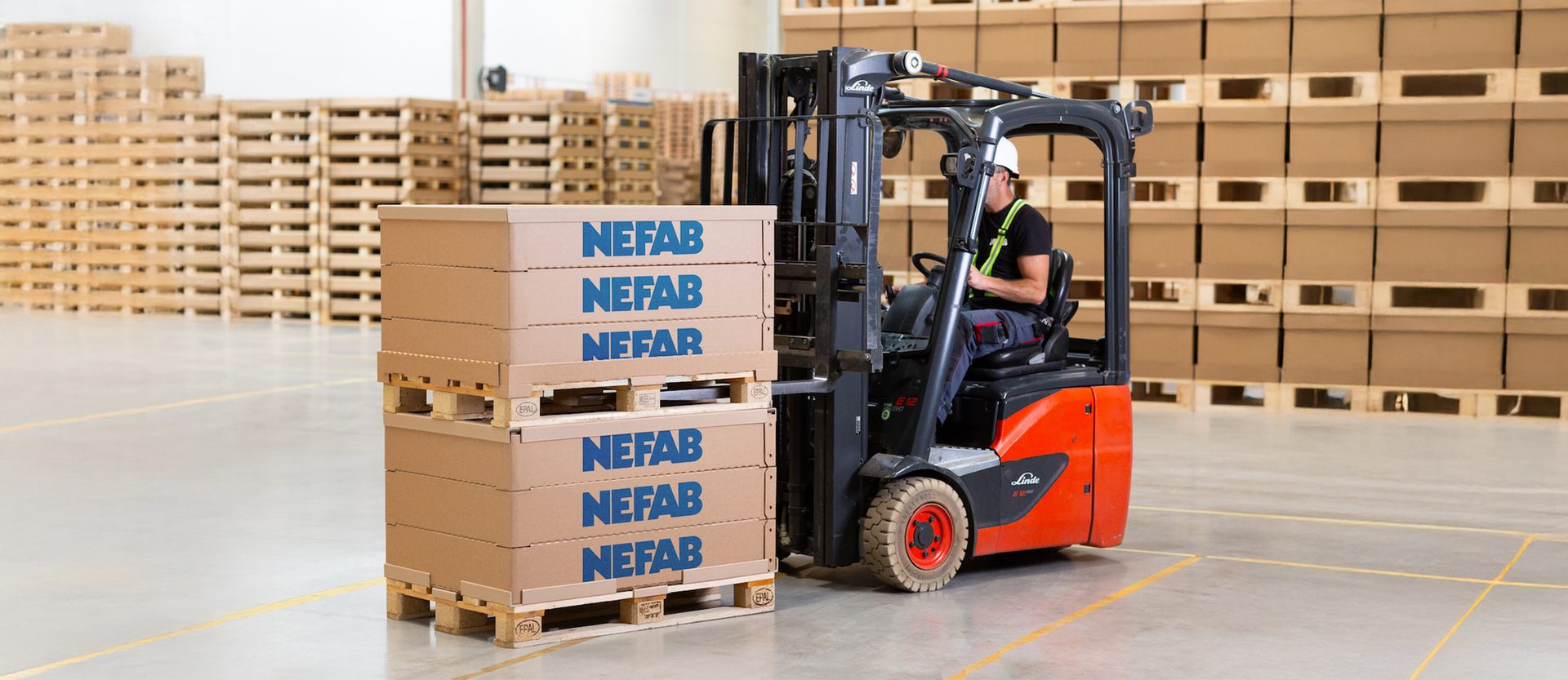
As an example, Nefab recently introduced the latest version of its EdgePak Collar, a fiber-based pallet collar that serves as an alternative to wooden ones. These new pallet collars help companies cut down on waste and costs, as they are both lightweight and recyclable, all while offering the same protection as traditional materials.
Furthermore, Dole recently took another step in its sustainability journey with the implementation of Oxifilm® — an innovative, macro-perforated, 100% recyclable stretch film — across its banana and pineapple operations in Latin America. By using Oxifilm®, Dole is eliminating approximately 85% of traditional palletizing materials and reducing waste by 4 lbs. per pallet.
On the robotics side, Applied Manufacturing Technologies recently introduced a collaborative palletizing solution built around the FANUC CRX-30iA robot. The system is designed to solve common palletizing challenges with fast deployment and intuitive operation.
Read below to learn more about these innovations in palletizing.
ADVERTISEMENT

Nefab Launches Next-Gen EdgePak Collar as Alternative to Wooden Pallet Collars
As industries face increasing pressure to cut emissions and reduce waste, Nefab has introduced the latest version of its award-winning EdgePak Collar, a fiber-based alternative to wooden pallet collars designed specifically for one-way shipments. With new sizes and enhanced strength and stability, EdgePak Collar provides a practical and cost-effective solution for industries where return logistics are not feasible.
“Many companies still use wooden pallet collars for one-way shipments, creating unnecessary waste and costs,” said Johan Tegell, Product Area Director at Nefab. “We worked closely with our customers to develop EdgePak Collar — a lighter, recyclable, and cost-effective alternative that significantly reduces both landfill waste and emissions without compromising functionality.”
READ MORE
Courtesy of Nefab
Reducing Emissions and Waste in One-Way Logistics
According to Nefab’s Life Cycle Analysis, replacing wooden pallet collars with EdgePak Collar in one-way flows can result in:
- 34% lower CO₂-eq emissions, thanks to lightweight, low-carbon materials.
- 49% less landfill waste, as it is recyclable in the world’s largest recycling stream – paper.
- 40% less weight than wooden solutions, reducing air freight by up to16%. Seamless integration, with quick assembly, flexible height, and standard sizes, ensuring compatibility with existing processes.
Recyclable Fiber-Based Design Offers Lightweight Alternative to Wood
Building on the success of its half-pallet solutions over the past years, Nefab is now expanding its EdgePak Collar line with new, full-pallet-sized options. These larger formats maintain the strength and stability required for demanding supply chains — made possible through advanced engineering and extensive testing in both laboratory and real-world conditions. The new EdgePak Collar retains the ease of use, flexibility and strength of traditional pallet collars but now offers greater adaptability for diverse shipping needs:
- Expanded Pallet Sizes: Now available in EUR (1200x800mm), US (48″ x 40″), and the original ½ EUR (800x600mm) for different logistics requirements.
- Customizable Strength: A range of standardized lids and bottoms optimize load capacities, from light to heavy-duty shipments.
- Enhanced Stability: The reinforced corrugated collar design provides better stiffness, enhancing stability for better product protection during handling and stacking.
Recognized for Sustainability and Innovation
The EdgePak Collar was recently awarded the 2025 WorldStar Award for its lightweight, recyclable design, reinforcing its role as a sustainable alternative or complement to traditional shipping solutions. The WorldStar Awards, organized by the World Packaging Organization, represent one of the highest honors in the packaging industry, celebrating the best packaging solutions worldwide.
“As part of our mission to reduce CO₂-eq emissions by 10 million tons in customer supply chains by 2030, we are dedicated to creating solutions that benefit both the environment and our clients. The EdgePak Collar plays an essential role in this mission — by rethinking and redesigning packaging to match the specific needs of each supply chain — considering factors like material, strength, size and flexibility — we help our customers reduce emissions and minimize resource use, one step at a time,” said Tegell.
COLLAPSE ARTICLE
Dole Food Company Expands Commercial Use of Recyclable Stretch Film
Dole Food Company recently took another step forward in its sustainability journey with the expanded commercial use of Oxifilm® — an innovative, macro-perforated, 100% recyclable stretch film — across its banana and pineapple operations in Latin America.
The expansion — having started in April 2025 — further replaces the use of corner boards, straps and clamps from the palletization process, eliminating approximately 85% of traditional palletizing materials, reducing waste by 2.2 kg (4 lbs.) per pallet.
READ MORE
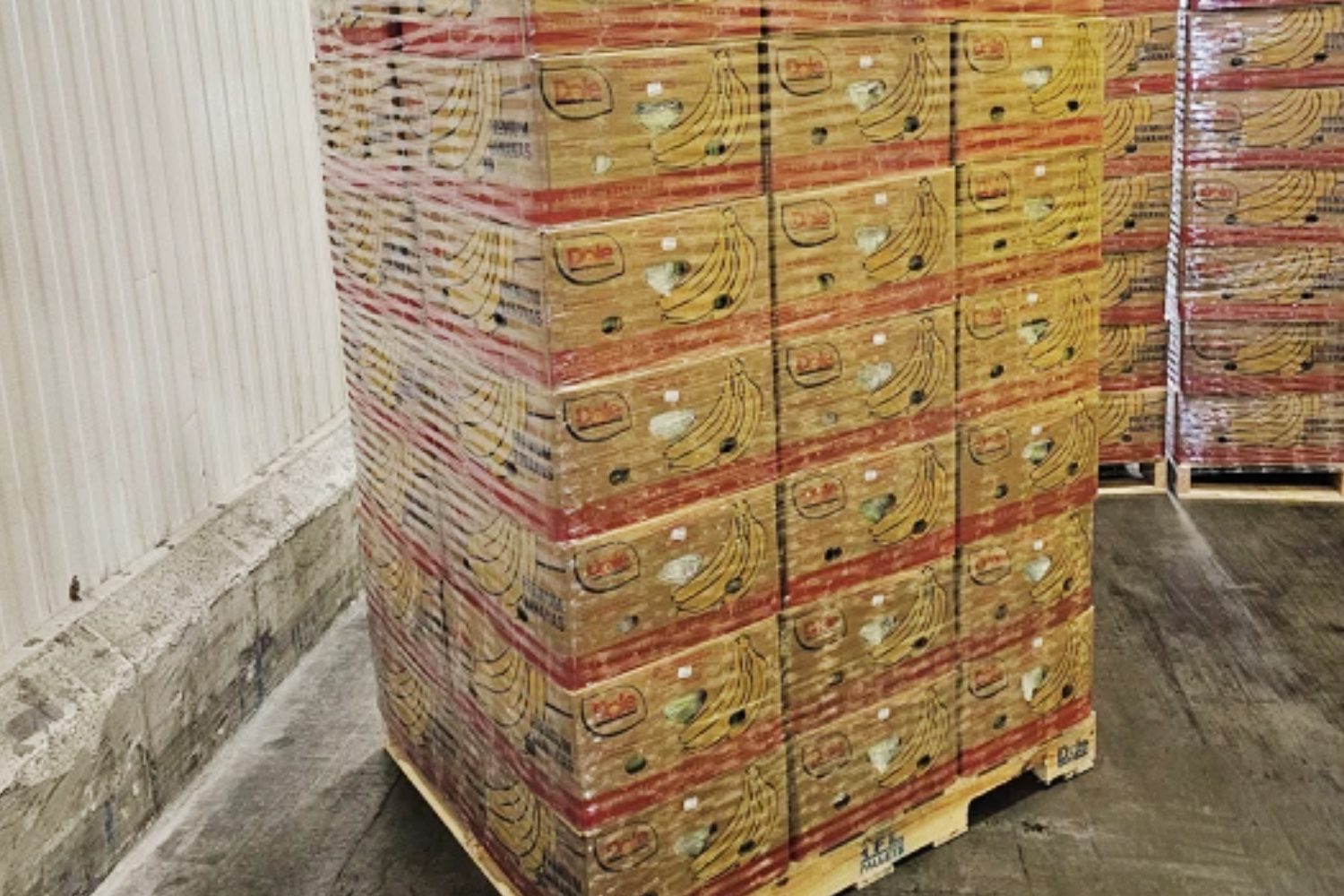
Dole’s expanded use of Oxifilm® will be applied to its banana and pineapple operations in Latin America.
Courtesy of Dole
This innovation will increase operational efficiency for Dole by automating part of the palletizing process in participating packhouses, improving ergonomics for workers and allowing them to focus on quality. Regarding ventilation, there are no statistical differences compared to the traditional system.
“Scaling up pallet wrapping across our operations is a win for both the environment and our business,” said Ana Cristina Obregon, Vice President of Logistics, Dole Tropical Products. “We’re significantly reducing the use of plastic while also enhancing efficiency in our supply chain and fruit quality. It’s another step forward in Dole’s commitment to innovation and sustainable agricultural practices.”
Dole’s adoption of Oxifilm® demonstrates a scalable, high-impact solution to reducing waste. While traditional corner boards are made from recycled materials, disposition routes for further recycling are difficult to establish and corner boards are rarely processed a second time. This product not only reduces overall material use but also ensures simpler, better recyclability, making it a very sustainable option for fruit palletization. This aligns with the company’s broader goals of reducing waste, enhancing efficiency, and driving sustainability across its global supply chain.
For more information on Dole’s sustainability initiatives, visit dole.com.
COLLAPSE ARTICLE
Applied Manufacturing Technologies Introduces Cobot Palletizing Solution
Applied Manufacturing Technologies (AMT), a FANUC Level V Authorized System Integrator and North America’s leader in robotics and automation engineering, specializing in advanced material handling, end-of-line solutions, on-demand engineering services, and cutting-edge autonomous mobile robots (AMRs) for manufacturing, warehousing and logistics, has introduced a plug-and-play collaborative palletizing solution built around the FANUC CRX-30iA robot. The system is designed to solve common labor, safety, and productivity challenges with fast deployment, intuitive operation, and minimal floor space requirements.
Built for flexibility and ease of use, the cobot palletizing solution allows manufacturers to increase throughput, reduce ergonomic risks, and maintain uptime, even with lean staffing. Unlike off-the-shelf systems, AMT’s solution features a custom-developed user interface (UI) that simplifies setup and empowers end users to create and modify palletizing patterns independently.
READ MORE
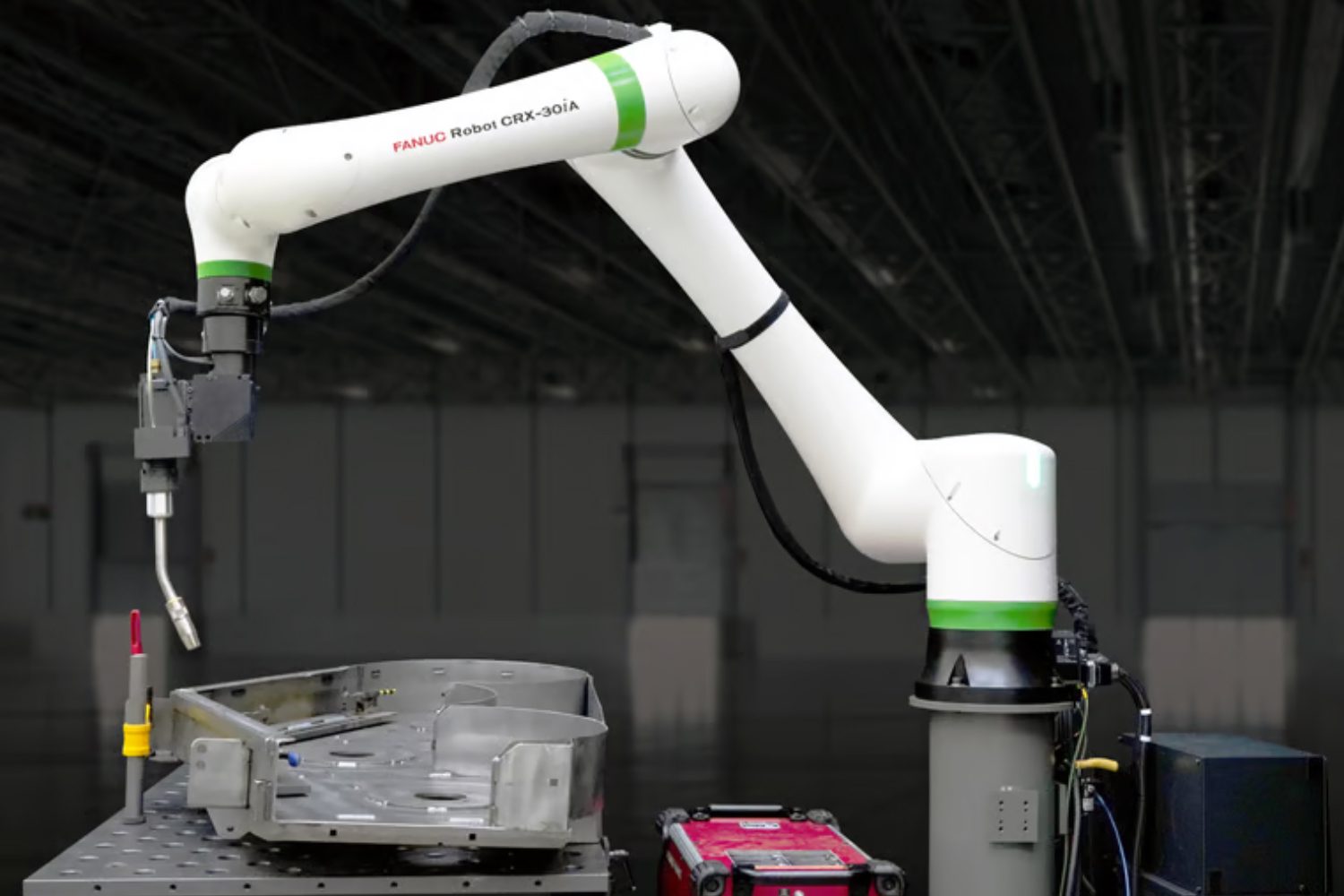
The new solution is built around AMT’s FANUC CRX-30iA robot.
Courtesy of Applied Manufacturing Technologies
“Ease of use was our top priority,” said Ben Kurth, Director of Engineering at AMT. “Users can quickly input case dimensions, select a pallet pattern, and begin operation: no coding or specialized training needed. That flexibility is a game changer for dynamic production environments.”
With a 30 kg payload, 1,889 mm reach, and IP67 rating, the FANUC CRX-30iA is an industrial-grade robot designed for continuous operation in demanding environments. As a power- and force-limited cobot, it can safely work in close proximity to people without the need for fencing, freeing up valuable floor space and eliminating the costs and complexity of traditional industrial robot cells.
“Cobot technology finally gives manufacturers a way to automate palletizing in places where industrial robots simply won’t fit,” said Kurth. “This system is ideal for high-mix, low-volume production or facilities with tight space constraints.”
Starting at $120K, AMT’s palletizing solution typically delivers return on investment in under one year through productivity gains, injury prevention, and operational flexibility. The system is designed to be easily moved between lines, allowing operators to make quick position adjustments and resume palletizing within minutes.
Key advantages include:
- Collaborative safety: Built-in sensors monitor joint torque and amperage to detect human contact and stop safely
- Custom configuration: Tailored integration with existing warehouse management systems (WMS) and plant networks
- Operator independence: No engineering support needed to reconfigure for new products or pallet patterns
- Space efficiency: Compact, mobile footprint fits easily into existing lines
- Industry flexibility: Ideal for packaging operations in food & beverage, logistics, pharmaceuticals, and more
- Optimized for case handling: Built for precise, consistent box stacking and adaptable to different case sizes and patterns.
“Cobots are ideal for repetitive, high-precision tasks like case handling and palletizing,” said Craig Salvalaggio, President of AMT. “We’ve built a system that delivers the speed, safety, and flexibility today’s manufacturers need to stay competitive — especially as they face ongoing labor shortages and ergonomic risks on the plant floor.”
